

The dairy farmer of 2026 looks a lot different than the farmer of a generation ago.
There are more numbers on the screen, more technology in the barn and more information available when it is time to make a decision. The pace of change on the farm is not slowing down.
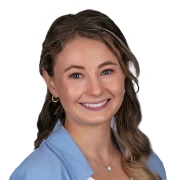
Corey Scott believes national Dairy Checkoff needs to keep pace.
“When I look at Dairy Management Inc. (DMI) and the work that we have to do, there are things that are the long game, and there’s things that we have to be the bleeding edge on,” Scott says.
Scott will become the third president and CEO of DMI in its history. She officially begins Oct. 12, taking over from Barbara O’Brien, who is retiring after 25 years with the organization.
For Scott, the move is less about stepping into a new industry and more about continuing work she has spent much of her career doing.
“I am so excited to officially transition and work with the 23,000 dairy farmers across the whole nation,” Scott says.
Scott comes to DMI after serving as president and CEO of Midwest Dairy, where she worked with more than 3,600 dairy farm families across 10 states. Before joining Midwest Dairy in 2024, she spent more than 15 years in leadership positions with Land O’Lakes and worked in animal nutrition and agronomy.
Now, she will oversee more than 150 DMI and National Dairy Council employees and serve as president and CEO of the Innovation Center for U.S. Dairy.
Scott says the opportunity is about serving the farmers who fund the checkoff and making sure their investment continues to produce results.
“America’s dairy farmers have built one of the most respected and successful checkoff organizations in agriculture, and I am honored by the opportunity to serve them,” Scott says.
Keeping up with Farmers
Scott has spent much of her career watching dairy farmers find new ways to make their businesses work better. She calls farmers “serial entrepreneurs.”
“They’re always looking for the next thing to make their operation excel,” Scott says. “And they have similar expectations for the checkoff work that we do.”
That expectation is important as farms adopt more technology. Scott describes what is happening on farms as a “technology revolution” involving automation, artificial intelligence, precision livestock monitoring, genomics, feeding technology and more.
The size of a dairy does not determine who is willing to try something new, she says.
“Size does not dictate whether a farmer is a thought leader or not,” Scott adds. “There’s space for all in the industry.”
For DMI, staying connected to farmers means understanding what they are working on, where the industry is headed and what those changes could mean for dairy demand. Scott says the checkoff needs to look both ways.
It needs to understand where farmers are going while also paying attention to where consumers are headed. Finding some common ground between the two could help dairy continue to grow.
“When you look at Checkoff as a whole, to garner engagement, you have to have relevance,” Scott says.
Keeping Demand in Front
Over the past 25 years, O’Brien has watched the dairy industry change from nearly every angle. Farms have become more efficient, competition for consumers has grown and shoppers have become more interested in how their food is produced.
For her, that has made the work of building demand a moving target. What consumers want changes, and the dairy industry has to keep up.
Through it all, she says one part of the checkoff’s job has stayed the same. It has to help make sure demand keeps pace with what dairy farmers can produce.
“We have to keep demand ahead of efficiency,” O’Brien says.
O’Brien says farmers invest in the checkoff because working together can build markets and consumer trust on a scale individual farms cannot reach on their own.
She leaves DMI confident in the foundation built during her tenure.
“Serving dairy farmers has been the privilege of my career,” O’Brien says. “I have every confidence that Corey and our outstanding DMI team will continue advancing the work of the dairy checkoff while remaining focused on the farmers and importers who make it all possible.”
Finding Dairy’s Place with Consumers
The consumer side of the equation is changing, too.
Scott says consumers are getting nutrition and food information from different places than they did years ago. A pediatrician may have once been a trusted source for a young parent. Today, social media influencers and online communities can have a large voice.
“We need to acknowledge our consumer base is receiving information in a different way,” Scott says.
That gives dairy farmers an opportunity.
“Farmer voices are trusted,” she adds.
DMI has ways to bring those voices to consumers, while also leaning on scientific and medical relationships such as its work with Mayo Clinic.
O’Brien says consumer interest in protein, healthy aging, weight management and food as medicine also gives dairy room to grow. Consumers are looking for foods they view as healthy and less complicated.
“Dairy fits,” she says.
The connection between dairy and nutrition is one reason O’Brien points to science as one of the biggest accomplishments of her time with DMI.
Investing in the Science
Over the past decade, dairy farmers have invested more than $10 million in 82 studies looking at dairy fat. O’Brien also points to work with Mayo Clinic examining cardiovascular, metabolic and gut health.
The goal is to build a stronger understanding of dairy and give farmers and the industry credible science to use when talking with consumers.
“Protect the science and science investment,” O’Brien says. “And frankly, if Checkoff didn’t make that investment, I’m not sure anybody would.”
Scott says the work cannot stop with the research already underway.
She wants DMI to look for opportunities before they become obvious and find places where dairy could play a bigger role in the food system.
“There’s an incredible foundation built at DMI, under Barb’s leadership,” Scott says. “And I know that they are primed to just move faster and harder, and look in some of those dark corners for the innovation that we don’t necessarily even realize we need yet.”
A Bigger Dairy Industry
Scott also sees opportunity beyond the U.S. Nearly 20% of U.S. dairy production is exported, making global demand an important part of the future for dairy farmers.
Younger farmers, she says, want to know there will be a strong marketplace for the milk they produce years down the road.
That means the checkoff has to keep dairy relevant at home and around the world.
Farmers also have a growing voice farther down the dairy value chain. O’Brien points to farmer ownership through cooperatives and other investments in processing as an example.
“The farmer’s fingerprints are all over this industry,” O’Brien says.
DMI’s Innovation Center for U.S. Dairy brings farmers, cooperatives and processors together to work on issues facing the industry, Marilyn Hershey says.
There is still room for more cooperation, she says, but relationships across the dairy industry have improved.
Building on what is Already There
Scott is not walking into an organization starting from scratch.
O’Brien says she is leaving at a time when the checkoff has a strong science base, deeper relationships across the dairy industry and new opportunities to connect dairy with consumers.
Scott says she wants to build from there.
“The work of the dairy checkoff remains critical to growing dairy demand, connecting with today’s consumers and creating new opportunities for the next generation of farmers and importers,” Scott says.
For O’Brien, the next chapter is personal as well as professional. After 25 years with DMI, she says the farmers she has met and worked with are what made the job meaningful.
Farmers have shared their businesses, families, hopes and concerns with her. They have talked about caring for cows, land and communities, and about building something for the next generation.
That is also what Scott says she is stepping into.
Dairy farmers are investing in genetics, technology, data and automation because they want to make better decisions and build better businesses.
Scott wants the checkoff to bring the same mindset to its work. The farm is changing quickly. The checkoff will have to keep up.



