

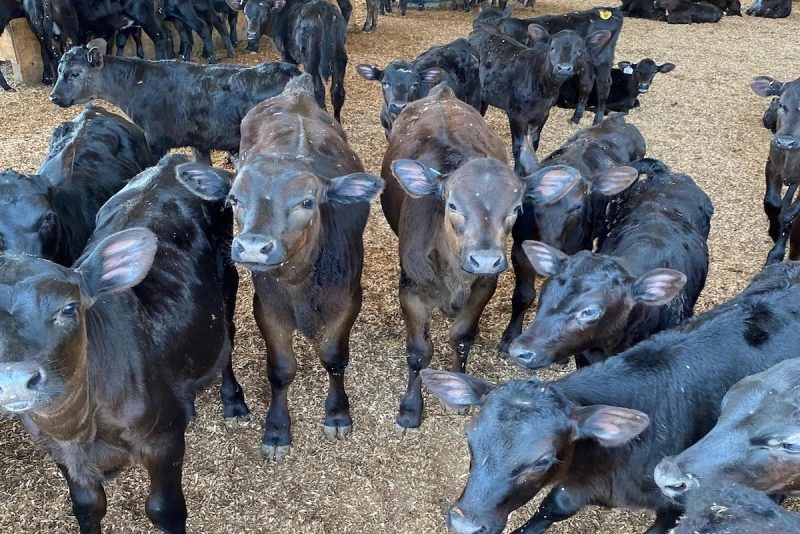
Beef-on-dairy has evolved rapidly in just a few short years. What started as a way to add value to surplus dairy calves has become a major and increasingly refined part of the beef supply.
In a short period of time, the industry has refined genetics, improved calf value and built stronger connections between the dairy and beef sectors. But while adoption has grown rapidly, the system isn’t perfect, and several hurdles still remain.
During an episode of “The Beef Podcast Show,” Dr. Tara Felix from Penn State University discussed some of these challenges.
Disconnected Calf Management
One of the biggest hurdles starts at birth. Many dairy producers sell calves shortly after they’re born, meaning they rarely see the long-term impact of early management decisions.
“The calf is born and then it leaves,” Felix says. “[Dairy producers are] taking that extra money and letting the calf be someone else’s problem.”
That mindset shows how early calf care is often disconnected from how the animal performs later. Some of the most important decisions, such as making sure the calf gets good colostrum, happen in the first few hours of life. But linking those early decisions to final carcass value remains difficult.
“We have very few longitudinal studies, from birth all the way to slaughter, to convince those calf ranches [and dairy producers] that they need to be making a difference,” Felix adds.
A Fragmented Supply Chain
Beef-on-dairy calves typically pass through multiple operations before harvest, creating a system where responsibility and information are often disconnected.
“We send them from the dairy to the wet calf ranch, then to the grower ranch, then to the feedlot, and finally to the packer,” Felix says.
That fragmented structure makes it difficult to track animals from birth to carcass and share performance data across the supply chain.
“There’s a big opportunity to track beef-on-dairy cattle through the whole system, get that information back, and use it to make improvements,” Felix says.
More vertically integrated systems could help close those gaps.
“There are already parts of the beef-on-dairy industry that are becoming what I would call vertically integrated,” Felix says. “They’re the perfect model.”
She believes more of these integrated operations will emerge in the future as the industry looks for ways to connect early management with final performance.
Missing Research on Young Calves
Despite rapid growth in beef-on-dairy, there are still major gaps in research, particularly during the early growth period.
“We know very little about calves between 250 and 450 pounds. I see a huge gap in our knowledge about rumen development, especially for beef-on-dairy calves,” Felix says.
Calves often move quickly from individual hutches into group feeding systems before their rumens are fully developed.
“We take these calves out of the hutch, put some feed in front of them, and expect them to adapt on their own, even though their rumens aren’t fully developed,” Felix says.
Early health events during that time can also affect carcass quality much later.
“These calves can be impacted at 60 days of age with an insult that’s going to ultimately end up messing up their marbling characteristics,” Felix says.
Health Challenges at the Finish Line
Even when cattle reach the feedlot, health issues can still impact value. Liver abscesses remain a persistent concern in some regions, and researchers still don’t fully understand how these infections begin or how long they persist in the animal.
“I think it’s critical to figure out what the heck is causing this issue, and where it’s starting,” Felix says. “These are all things that we really don’t have any idea about.”
The System is Here to Stay
Despite the challenges, the role of beef-on-dairy in the beef supply is unlikely to shrink.
“Beef-on-dairy is here to stay. So, let’s be clear about that,” Felix says.
The next phase will depend on closing knowledge gaps, improving data flow through the supply chain and refining calf management from birth forward. As those hurdles are addressed, the industry will be better positioned to turn a fast-growing concept into a fully optimized production system.



