

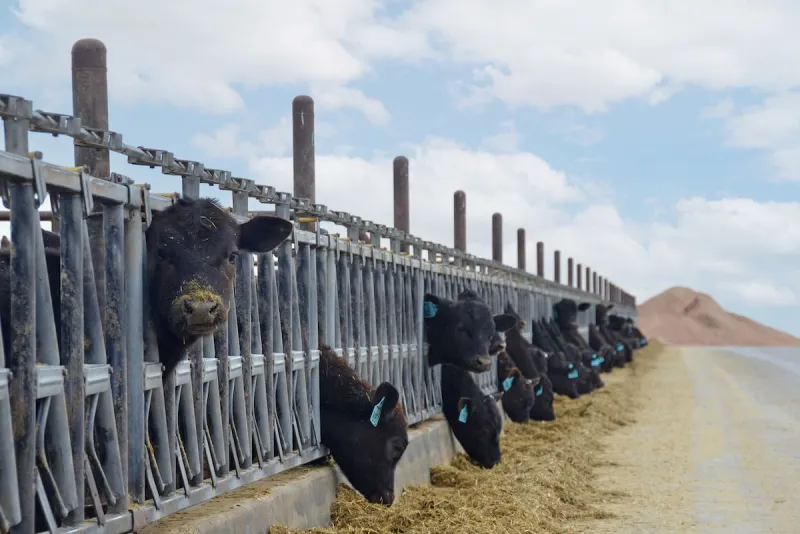
Beef-on-dairy cattle have become a much larger part of the U.S. beef supply chain over the past decade, growing from an estimated 13% of feedyard placements in 2016 to nearly 26% in 2025.
What started as a way to take advantage of a tight beef supply has grown into a substantial part of the industry. Higher calf prices, more investment in raising calves and stronger connections between dairies, feedyards and processors have helped fuel that growth.
Yet gaps in market reporting make it difficult to measure the full impact on beef production and determine whether dairy producers are receiving the best value from their breeding and marketing decisions.
Speaking during a University of Tennessee webinar, Charlie Martinez described how much the market has developed.
“It’s become more than just a substitution niche-style market to actually a more fully developed market that actually has some long-term sustainability built in,” says Martinez, who previously served as an assistant professor in the University of Tennessee’s Department of Agricultural and Resource Economics and director of the UT Center of Farm Management. He is now director of the King Ranch Institute for Ranch Management.
Martinez has been studying how the growing number of beef-on-dairy cattle is changing the U.S. beef industry. His research tracks their numbers, influence on fed-cattle markets and the need for better data to guide breeding and marketing decisions.
Beef-on-Dairy Expands Its Reach
Beef-on-dairy production has been around for decades, but high beef prices and growing demand for feeder cattle have accelerated its development.
During the 2013-2015 cattle market run, higher feeder-calf prices encouraged more dairy producers to breed cows to beef bulls. As prices fell, interest eased. The market began gaining momentum again in 2022 as beef supplies tightened and calf values climbed.

In the past, the beef industry largely turned to dairy calves to help fill gaps when beef supplies were tight. Martinez says the market is becoming more established, with new investment helping drive its growth.
“We’ve seen a lot of private equity be brought to the industry,” Martinez says.
Private investment has helped build businesses across the beef-on-dairy supply chain. Some companies work with dairies on bull selection and semen marketing, then buy the resulting calves and retain ownership through feeding and processing. Calf ranches have also grown as more businesses invest in developing these animals beyond the dairy farm.
Martinez says companies are willing to take on the upfront costs and wait nearly two years for those cattle to reach market.
“Even though it might take 18 months, 20 months in some cases to get these calves to where they need to be, they’re willing to have the upfront cost of buying bulls, marketing semen, buying back the calves, and then maintaining ownership of these animals,” he says.
Dairy producers also have seen the financial appeal. Martinez recalls how beef-on-dairy calves were worth roughly $50 to $75 in 2021 and 2022 before some values climbed to $600 or $700.
“From a business standpoint, [it was] a massive shot in the arm on the profitability line,” he says.
An Estimated 5.4 Million Head

To estimate beef-on-dairy’s footprint, Martinez and graduate student Parker Wyatt analyzed USDA cattle inventory, cattle-on-feed and fed-cattle marketing data.
Their approach estimates beef-on-dairy numbers by starting with the dairy cow inventory, subtracting dairy replacement heifers and accounting for straightbred dairy cattle marketed during the year.
Using this method, they estimated the number of beef-on-dairy cattle in the supply chain grew from 2.8 million in 2016 to 5.4 million in 2025. Over the same period, their share of total feedyard placements nearly doubled, climbing from about 13% to 26%.
“Even if we were to come back a little bit to 23%, 22%, almost one quarter of all cattle placed in feedyards last year were beef-on-dairy cattle,” Martinez says.
He cautions against interpreting the estimate as an exact count, but the trend points to a growing presence in the beef supply chain.
“I think we’re kind of at this plateau,” he says, referring to the potential for additional growth in the near term. “I don’t think we have another 10%, 20% built into this.”
Martinez expects beef-on-dairy numbers to remain substantial, even if the pace of growth slows. Investment in the segment, continued demand from feedyards and the availability of dairy-origin calves all support an ongoing market.
“I really don’t see this segment decreasing anytime soon, especially within the next five to 10 years,” he says.
Calf Values Reach New Highs
Rising calf prices offer another indication of how much the market has developed, although prices have pulled back considerably in recent months.
Martinez’s analysis of auction data from Pennsylvania, Maryland and New York found substantial increases in the value of beef-on-dairy calves. In Pennsylvania, 80- to 90-pound calves averaged about $200 per head in 2019 before beginning a sustained climb.
By January 2026, the Pennsylvania market averaged just over $1,400 per head, with prices reaching approximately $1,500 in February. Reports from New York earlier in the year put day-old beef-on-dairy calves above $1,850 per head.

While calf values have since come down, the longer-term increase shows how much more value beef-on-dairy calves have brought to dairy operations and the broader beef supply chain.
The market has also produced some unexpected signals. Martinez found heifers have recently commanded higher prices than bulls in the auction markets included in his analysis.
Between 2020 and approximately 2023, bulls generally carried a price premium. The pattern reversed in 2024 and continued through 2025 and 2026.
Martinez says the reason remains uncertain. Buyers could be accounting for the expense and management associated with castrating bulls, along with potential risks during development.
“We really don’t have a great answer for that,” he says.
The available auction data also cover a limited geographic area, leaving producers elsewhere with little comparable information about local calf values.
Better Data Could Help Producers
Despite the growth in beef-on-dairy production, Martinez says the industry lacks consistent market reporting to measure the segment’s full economic impact.
The USDA’s Livestock Mandatory Reporting system identifies straightbred dairy cattle separately from beef cattle. Beef-on-dairy animals, however, are reported as beef.
As a result, the market reports do not consistently distinguish crossbred cattle from traditional beef animals, making it difficult to track their numbers, weights and prices throughout the supply chain.
“Right now, the impact of beef-on-dairy in the U.S. beef supply chain is very hard to pin down,” Martinez says.
The gap extends to the dairy farm level, where producers must decide how many cows to breed to dairy sires to generate replacements and how many to breed to beef sires to produce marketable crossbred calves.
Without comprehensive price reporting, producers have limited information to compare breeding and marketing options.
“If you know you need replacement females, are you better off breeding them for beef-on-dairy or should you be breeding more for replacement females to market at an auction setting?” he asks. “We can’t really answer that because we have no data to utilize to make those decisions.”
What Comes Next?
Martinez’s research found correlations between estimated beef-on-dairy numbers and several fed-cattle market indicators, including cattle weights, prices and quality grades.

As estimated beef-on-dairy numbers increased, the researchers also observed a strong positive correlation with the number of cattle grading Prime and a negative relationship with Select. They cautioned, however, that the analysis does not establish a direct cause-and-effect relationship.
The findings support further investigation into how beef-on-dairy cattle influence the broader market and whether current reporting methods adequately capture the segment.
At a 2026 National Cattlemen’s Beef Association event, Martinez and his colleagues surveyed 153 attendees about beef-on-dairy reporting. Sixty-two percent supported adding the category to USDA Agricultural Marketing Service reports, while 65% favored including it in cattle-on-feed reports.
Better reporting would help researchers track cattle numbers and give producers a clearer picture of the market.
“We know that beef-on-dairy is a growing part of the beef supply chain,” Martinez says. “But to answer the question of what is the impact, we cannot define the actual numbers because there’s no current methods of reporting.”
As beef-on-dairy continues to grow, more consistent reporting could help producers evaluate calf values, breeding decisions and marketing opportunities while giving the beef industry a better picture of its cattle supply.