
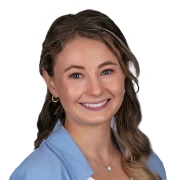

On a cold November morning in Maquoketa, Iowa, a used robot clicked to life at the end of a newly built tie-stall barn, and Heather Moore wondered if she and her husband, Brandon, had finally lost their minds.
Today, the Moore family operates a 35-cow dairy in eastern Iowa with a tie-stall barn, robotic milking system, creamery, farm store and meat locker. Five miles away, Moore Local serves customers with cheese and other locally produced foods, while Rockdale Locker provides USDA-inspected meat processing for area farms and community projects.
But none of it was part of Moore’s original plan.

“When we first started milking in 2014, I just wanted to have a small, show-style herd of registered Holsteins,” Moore says. “If you’d told me we’d end up with a robot, a creamery and a 4,500-square-foot store tied to this farm, I don’t know if I would’ve believed you.”
The farm Moore built looks nothing like the one she imagined in 2014. But along the way, she and her husband stayed willing to try something new, take a chance and see where it might lead.
Starting a Dairy from Scratch
Moore’s roots run deep in dairy, though her family’s herd was gone by the time she was in elementary school. She grew up on her grandpa’s small dairy near Mount Sterling, Wis., where 20 cows were milked and the milk went to local cheese factories.
When she and Brandon married in 2011, the couple bought a farm in eastern Iowa that was anything but a dairy. Their first plan centered on a feedlot, and their early years were built around rented pastures and stock cows while they custom fed beef calves for a local farmer.
Even then, Heather kept coming back to dairy.
“My someday dream, like big crazy dream, was to become a dairy farmer,” she says.
A few years later, the couple purchased adjoining property to their farm, giving them the space and opportunity to build the dairy they run today.
“We’re not first-generation farmers, but we are on a first-generation farm,” she says. “We essentially started our farm from scratch.”
When Moore and her husband sat down with their FSA loan officer to talk through the plans for the new ground, the proposal on paper was still focused on expanding the feedyard. Moore brought up her “someday” dream of milking cows, and the loan officer challenged her to see if a small dairy could cash flow alongside the beef.
She went back, ran the projections, and the numbers came together well enough to justify a modest start. The couple designed a 50-cow tie-stall barn themselves, built it, and milked their first cows in October 2014 with just 25 animals in the string.
The first winter tested all of it. During Thanksgiving week, temperatures dropped to 20 below. Water cups broke, mangers flooded and Moore spent weeks changing frost plugs.
She also remembers losing her first cow during a snowstorm, then realizing how different it felt to move from working around dairies to being responsible for one.
“It was different going from seeing it and being part of it to being the one responsible for everything,” she says. “That was a big adjustment.”
Even with the challenges, Moore continued to build the herd. She looked for affordable young animals, bought springers when cash flow allowed and took on a custom-milking arrangement with a local farmer who wanted his heifers freshened, the calves sold and the cows moved. At one point, 28 of the 50 cows were first-calf heifers just two weeks into lactation.
By the following May, the farm had grown to 50 cows. But the bigger herd didn’t bring a bigger milk check.
“We got up to 50 cows, but our milk check didn’t really change,” Moore says. “I remember sitting down and looking at the numbers. We had all this debt and these brand-new cows, and we were thinking, ‘What are we going to do? How are we going to make this work?’”

Looking Beyond the Milk Check
With 50 cows in the barn but little change in the milk check, Moore knew she needed another way to make the dairy work. Cheese was the idea that kept coming back to her, but she wasn’t sure if customers would buy it or if building a creamery of their own would ever pay off.
So instead of pouring money into equipment, they decided to test the concept first. In October 2017, they began shipping milk to Nordic Creamery in Westby, Wis., where a cheesemaker turned it into cheddar under their label. Back home, Moore took on the job of figuring out whether there was a real market for that cheese and how to reach local customers.
A vacant coffee shop on Main Street gave them an unexpected place to start. Moore met the building’s owner at a wedding reception, and he offered her the space for the cost of heat during the winter. It was a low-risk way to get product in front of people without another large loan.
She decided to call the shop Moore Local, a name that captured what she wanted the business to be — a place where customers could find food made by local farmers and producers.
The next question was whether anyone would buy the cheese.
A local Fareway manager was doubtful. He told Moore there wasn’t a market in Maquoketa for $8 per lb. cheese. Moore asked him to put it on the shelf anyway and only charge her for what sold.
“He did what I asked and sold out in like three days,” she says. “Our community showed up for us and has been our number one supporter from day one.”
As customers kept coming, the little coffee shop that started it all quickly needed more room. Moore and her husband moved into a larger location in May 2019, then bought the building they’re in today in November 2020, turning that small start into Moore Local. Today, the store welcomes thousands of shoppers each year.

Building a Meat Locker for the Community
As the shop grew, Moore started seeing another need in the community. When COVID-19 hit, even finding basic meat at the grocery store could be a challenge, and it got her thinking about how they could offer more locally raised food.
“You could look out your window anywhere in Jackson County and see poultry houses, dairy farms and feedlots, but there wasn’t a meat processor nearby,” Moore says. “There just wasn’t a way to get that food to people locally.”
The store had become a natural place for local food to move, but without nearby processing, farmers and families still hit a wall. That’s when the Moores’ partnered with neighbors Chad and Kim Thompson to build Rockdale Locker. They purchased an existing building in town, stripped it back and rebuilt the facility to meet inspection standards, opening the locker in January 2022.
“I never would have imagined we’d have a processing facility. That wasn’t part of the plan either, but here we are,” she laughs. “It’s been really neat to see what it’s become and how many people it can help.”
Today, Rockdale Locker handles the equivalent of 1,200 beef animals per year, mostly custom work for area farms. It also supplies meat for the Moores’ retail store, giving customers a place to buy local beef and pork alongside the cheese.
Because Rockdale Locker is USDA inspected, it also opens doors for donation and school food projects. Recent efforts include processing 5,000 pounds of pork from the Jones County Fair for the food bank, along with beef and pork that go to local schools, churches and community groups.
“That’s probably my favorite part of being USDA inspected,” Moore says. “It lets us be part of some really cool projects with some really cool people. Our community means a lot to us, and giving back is part of our mission.”

Bringing Cheese Production Home
After several years of hauling milk to Wisconsin for processing, Moore and her husband decided it was time to bring the cheese production home. With help from a Dairy Business Innovation Alliance grant and a county revolving loan fund, the Moores’ opened a creamery in November 2022, bringing another part of the business under their own roof.
Today, cheesemaker Kayla Mensendyke leads production in a creamery beside the 4,500-square-foot store. The team makes fresh curds, cheddar and Colby Jack, with most of it sold at Moore Local and some products finding their way onto shelves at other retail locations.
Looking ahead, Moore plans to add bottled milk to the store’s lineup, pushing more milk from their herd through the creamery.
“It’s something I’d like to do relatively soon,” Moore says. “There’s always something new we can try, and we’re excited to keep growing and figuring out what’s next.”

A Robot in a Tiestall Barn
As the farm store, meat locker and creamery expanded, the work on the dairy didn’t slow down. The cows still needed to be milked, fed and cared for every day, and Moore was doing much of that work herself.
And while Brandon enjoyed the farm, he had always been upfront about where he stood with the cows.
“From the beginning, he said, ‘I’m not milking cows. I’ll feed them, I’ll breed them, but I am not milking them,’” Moore laughs. “In all of the years that we’ve owned the farm, he’s only milked 10 times.”
With five kids, a tiestall barn and a growing farm store, Moore knew she couldn’t spend her days tied to a milking schedule. They started looking for another option and eventually found a used Lely A3 robot that fit their budget.
Building a new robot barn wasn’t financially realistic, so they figured out how to make the robot work with the barn they already had. They extended the milk house to make room for the robot, put the unit under roof and added a fetch pen that connects to the outside lot.
Instead of removing the tie stalls, they added gates and changed the cow flow so the cows could move between the tie-stall barn, yard and robot. It took plenty of trial and error to get the setup working, especially during Iowa winters.
The timing made an already busy year even busier. Moore says they brought the creamery online and finished installing the robot in the same week in November 2022.
“I don’t know what we were thinking doing both of those things at the same time,” Moore laughs. “It was a lot, but we figured it out as we went.”
Today, the robot milks about 35 cows, down from the 50 cows they once milked. Moore says part of the reason for the smaller herd is the time and transportation needed to run the creamery.
For a herd that size, the robot might seem unusual, but adding it was never about milking more cows. It was about giving Moore more time to run the growing business and spend time with her family.
A Business Built Around People
The more Moore has added to the business, the more she has learned she can’t do it alone.
Today, the store has two full-time employees and nearly 25 high school students who help on weekends and during busy times. That support gives Moore and Brandon more time to work on the farm and, just as importantly, be there for their kids.
“If you’re doing all of this to give your kids a good life, you have to be able to step away sometimes, too,” Moore says. “I want to be able to go to their games, be there for them and not feel like I always have to be on the farm.”
Not everyone understood the path the Moore family was taking. Running a dairy, cheese business, creamery, store and locker under one umbrella isn’t a typical dairy setup, and there were plenty of times people wondered how they could make it all work.
But Moore has never been afraid to try something different. She’s stayed open to ideas, even when they weren’t part of the original plan, and that willingness to try has become a big part of how the business has grown.
“Part of my motto is, if plan A doesn’t work, there are 25 more letters in the alphabet,” Moore says.
And while she doesn’t know what the next letter will be, bottled milk, more cows, another location or something they haven’t considered yet could all be ahead. For Moore, that’s part of the excitement — staying open to new opportunities and seeing where they lead.
For more human interest stories, read:



