

Flies can quickly go from a minor nuisance to a herd-wide problem, but staying ahead starts with finding and cleaning up breeding spots early.

The affected herd is located in Charlevoix County, located west of Michigan’s Modified Accredited Zone (MAZ), where the disease is known to be present in the state’s white-tailed deer population. The detection follows identification of bovine TB in an adult cow at a USDA Food Safety Inspection Service-inspected processing plant.

It’s time to start thinking about how to protect herds from New World screwworm before it reaches the U.S.

Keeping birds away helps safeguard feed quality and reduce disease risk for your herd.

Officials have confirmed the first case of highly pathogenic avian flu in a Wisconsin dairy herd.

As we aim for improved biosecurity measures, understanding both the challenges and solutions will pave the way for better practices on calf ranches, ultimately creating a win-win situation for both calves and humans

The overall goal of a biosecurity plan is to safeguard herd health to support overall productivity and profit.

A dangerous livestock pest, the New World Screwworm, has resurfaced in Central America, prompting a U.S. livestock import ban and renewed warnings for producers to watch for signs of infestation.

Neogen CEO expects Kersia’s prioritization of investment and growth in the biosecurity market will benefit the business and provide sharpened strategic focus to maximize its potential for continued growth.

The outbreak, discovered in the city of Gyor, is the first outbreak of foot-and-mouth disease outbreak reported since 1973.

The plan, announced by USDA Secretary Brooke Rollins, dedicates up to $500 million to help poultry producers implement biosecurity measures and up to $400 million in financial relief for farmers whose flocks are affected by avian flu.

2024 was a year that confronted APHIS with new challenges, forcing the agency to find new and creative solutions to animal and plant health threats, says APHIS Administrator Michael Watson.

The current outbreak underscores the importance of biosecurity measures, rapid response and vigilance to protect agriculture and livestock from this economically devastating disease. Here’s the latest on FMDV.

Germany’s meat and dairy exports outside the EU face severe restrictions after the country’s first case of the livestock disease foot-and-mouth was confirmed on Friday.

USDA announced on Oct. 30 the first reported case of H5N1 in a pig in an Oregon backyard farm.

National disease prevention relies on systematic monitoring and biosecurity to protect animal health, trade, and economic resilience against outbreaks like Highly Pathogenic Avian Influenza.

The early bird registration deadline is quickly approaching - October 31. Register today to be a part of the elite Milk Business Conference in Las Vegas.

Highly pathogenic avian influenza and African swine fever are two high-priority research areas that will be funded through a $17.6-million investment by USDA’s National Institute of Food and Agriculture to protect the health and welfare of agricultural animals.

USDA-FSIS said it collected 30 samples from “states with dairy cattle herds that had tested positive for the H5N1 influenza virus at the time of sample collection.” No virus particles were found to be present.

The livestock industry needs a comprehensive, cohesive plan to address the virus. Producers, their employees and veterinarians need clear answers and support from U.S. agricultural leadership, moving forward.

South Dakota Dairy Producers encourages all dairy producers to closely monitor their herd and contact their herd veterinarian immediately if cattle appear symptomatic.

The American Association of Bovine Practitioners is making the name change, as it more accurately reflects the issue.

Ohio has become the sixth state where dairy cattle have tested positive for highly pathogenic avian influenza (HPAI), also known as bird flu.
!["There's no cure for any of it [HPAI, FMD and ASF]," Bacus says. "The best thing we could hope to do is track and vaccinate our way out of it."](https://assets.farmjournal.com/dims4/default/048af1e/2147483647/strip/true/crop/640x428+0+26/resize/250x167!/format/webp/quality/90/?url=https%3A%2F%2Ffj-corp-pub.s3.us-east-2.amazonaws.com%2Fs3fs-public%2Flivestock_trucks-trailer_%283%29.JPG)
Under the rule, APHIS would require tags that are both visually and electronically readable for interstate movement of cattle and bison six months after a final rule is published in the Federal Register.

From increasing practical livestock biosecurity measures to advancing rapid depopulation and disposal abilities during animal disease outbreaks, Farm Bill funding will support endeavors to protect animal health.
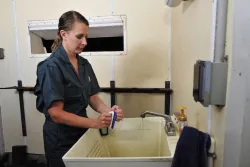
Putting biosecurity protocols in place can help reduce the risk of disease being transferred to not only livestock, but to humans as well.