
Risk Management

Since being confirmed on Feb. 13, Secretary Rollins has been in the Washington D.C., USDA office for a few hours. Most of her time has been spent visiting farmers, ranchers and ag businesses in Kentucky, Kansas and at Top Producer Summit.

Among the secretary’s first public appearances since being confirmed last week, the fireside chat on Tuesday, Feb. 18, will cover key topics driving the future of agriculture.

As the dairy industry navigates evolving challenges, the bond between processors and producers is more significant than ever
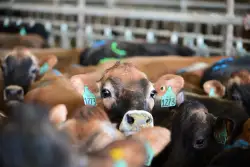
As we look ahead to the opportunities and challenges of 2025, the USDA’s Farm Service Agency (FSA) is once again opening the doors for enrollment in the Dairy Margin Coverage (DMC) program.

Products making environmental, social and governance-related claims averaged 28% cumulative growth between 2018 to 2022, versus 20% for products that didn’t, according to McKinsey & Company.

Agriculture can sometimes act as a buffer during broader economic recessions, as demand for essential food items tends to remain relatively stable. However, when multiple indicators align in the industry, it can signal a recession.

Experts are predicting that Dairy Margin Coverage (DMC) will average between $11.85/cwt and $12.20/cwt during 2024.

Tips for producers to maximize making money now that the profit equation is finally in favor of dairy.

In the world of dairy farming, maximizing profits and ensuring financial viability is a constant challenge.

If there’s any assurance about the economic picture for the dairy industry and agriculture in general going forward in the next few years, it’s that volatility will be a constant.

Dairy producers wonder what it will take for the market to turn around, as we wade out of this volatile economy. Phil Plourd shares fluctuating signals that are a telltale sign if milk prices will rebound in 2024.

Milk protected at the $9.50 level will receive indemnity payments of $761.56 for each one million pounds enrolled.

USDA has announced that the 2024 Dairy Margin Coverage sign-up will open Feb. 28 and run through April 29.

Despite rumors of its demise U.S. milk producers expect 2024 to be a profitable year according to the latest report released from Zisk, who has pulled insights from nearly half of dairy herds across the U.S.

Dairy producers realize that good times don’t last forever. While producers are hoping good times circle again, until then, keeping a close eye on your financials will help you weather the financial storm.

With interest rates much higher than a year ago and inflation impacting almost every good and service, producers must crunch numbers frequently to understand their cost of production and be strategic with future debt.

Farmers routinely handle high-dollar transactions — and the nature of the payments, often through unsecure methods, leaves them susceptible to foul play.

Recently on a Farm Journal Milk Business webinar, three dairy thought leaders talked about the importance of gathering around a table with other team members, especially during challenging times.

Recently on a Farm Journal Milk Business webinar, three dairy thought leaders talked about the biggest challenges facing producers and what their takes are on risk management strategies.

Agility — it can be the difference between those who make it in the dairy industry and those who don’t. Learning to pivot to the next stepping stone to success is what leading dairies, like Van Ess Dairy doing well.

“If I were picking both from a financial and an emotional perspective, the next place I could put a dollar, I still would favor farmland pretty highly,” Bruce Sherrick says.

If your spouse dies, look into filing Form 706 Federal Estate Tax Return with the IRS. Taking that step could help you protect farm assets so they pass to your heirs without estate taxes. The process isn’t automatic.

More than 50% of farmers intend to grow their operation, based on responses in Purdue’s February 2023 Ag Economy Barometer. If you’re thinking about scaling your farm, it’s important to first ask these questions.

Phil Plourd, president of Ever.Ag Insights, says that from a producer perspective, risk management decisions have gotten tougher in the past few months. Penn State offers tips to be considered when using milk futures:

Dr. Marci Rossell told the DFA Annual Meeting audience that when you take a historical review, you can better understand that today’s circumstances are quite different than the 80s or even 2008-2009.

The rollercoaster of the dairy industry certainly isn’t new. Dan Basse told the PDPW audience last week that a great reset is underway for the dairy economy, which will spell a more competitive world market.

A proactive plan allows you to be ready to sell when opportunities arise as well as leave the upside open for greater profitability.

Yes, basic insurance for the farm is pricey. But an umbrella policy is usually more palatable, and it could literally save your operation in the event of a wreck or other tragedy, says Purdue’s Fred Whitford.
Ben Laine, a senior dairy analyst with Terrain, says that he expects 2023 will be deceptively steady in the sense that the U.S. will stay fairly level with current cow numbers.

The USDA’s Farm Service Agency recently announced that it has extended the enrollment and coverage election period for 2023 Dairy Margin Coverage to Jan. 31, 2023.