
Dairy Genetics

Dave Thorbahn’s life work exemplifies leadership, innovation and dedication to industry improvements, making him a truly deserving recipient of this prestigious award.

Alternative revenue sources are becoming more and more common to help producers financially stay afloat. The goal moving forward is clear: striking a delicate balance that ensures longevity and relevance in an ever-changing industry.

Launching in August, the Council on Dairy Cattle Breeding’s new Milking Speed PTA offers U.S. producers an objective, high-heritability tool to select for faster-milking cows.

As dairy producers increasingly use beef semen to capitalize on calf value, longer gestation lengths are straining pre-fresh pens, pushing the industry to rethink cow flow, facilities, and future genetics.

With the drive to improve, Wiebren Jonkman, a visionary young dairy producer, purchased a Merced, California dairy and transformed it into a beacon of modern agricultural success.

The U.S. bovine semen industry’s resurgence in 2024 signifies more than just a recovery. It represents a transformative wave of growth that is poised to impact livestock reproduction on a global scale.

World Dairy Expo is proud to reveal the extraordinary individuals who have been chosen as the recipients of the esteemed 2025 Expo Recognition Awards
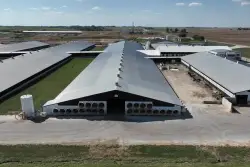
A decade into the partnership, GenoSource has grown into more than the original partners ever imagined. The dairy now involves eight families, who all love Holsteins and share a goal of creating a more sustainable future for the next generation.

How this Iowa dairy boosts their bottom line with genomics and crossbreeding.

With tight margins, evaluating purchases is more crucial now than ever.

Among the mix of technologies, management factors, and strategies to raise healthy calves: genetics. There is growing evidence that calves can inherit the ability to resist calfhood diseases like pneumonia and scours from their parents.

Beef “recip” cows are extremely expensive to purchase. Could renting dairy uteruses be an avenue for beef producers to explore?

As beef-dairy crossbred calves become a more widespread industry staple, they present their own set of specific benefits and challenges to the marketplace. A recently published study by Iowa State University researchers explored both.

Hesston Geddes admits the opportunity to live and work in Hawaii’s lush tropical backdrop enticed him to travel to Waipahu, to take on the manager role at Cloverleaf Dairy, the last commercial dairy in Hawaii.

Since 2011, dairy cows evaluated using genetic testing has doubled every five years to exceed 1 million annually. That reduced sire generation interval to the point where genetic improvement is at the biological limit.

As beef-on-dairy animals within the feedlot system continue to rise, feedlots are craving two key pieces of information to help ensure these crossbred cattle thrive.

According to Idaho Dairymen’s Association for the first time in a long time, production growth will likely come to a halt due to the financial stress and the negative margins producers out west are experiencing.

No matter when beef cross calves are being sold, steps can be taken to make them more marketable.
Beef cross calves are currently generating healthy profits for dairies. They also are a welcome addition to the beef supply chain, according to Dr. Zeb Gray, Beef Technical Feedlot Specialist with Diamond V.

Last week, AgriTalk host, Chip Flory, visited with two dairy farmers -- Ken Smith and Darlene Lopes at Milk Business Conference to talk about the challenges that face dairy, as well as what opportunities lie ahead.

Agility — it can be the difference between those who make it in the dairy industry and those who don’t. Learning to pivot to the next stepping stone to success is what leading dairies, like Van Ess Dairy doing well.

The Milk Business Conference in Las Vegas Nov. 28-30, highlights every corner of the dairy industry and has a great line-up of speakers to help producers capitalize on and further develop their strengths. Sign up today.

Beef-on-dairy is arguably the most significant advancement for America’s beef industry in a generation.

Select Sires Inc. and Inguran LLC (dba STgen™) have signed a letter of intent to combine Select Sires Inc.’s and STgen’s production, research and development functions into a new company.

Recently, the board of directors from Select Sires four individual cooperatives voted unanimously to merge together as one full-service A.I. cooperative.

The URUS Group LP (URUS), based in Madison WI, has announced the purchase of a majority interest in Leachman Cattle of Colorado(Leachman), based in Fort Collins, Colorado.

One Holstein sire born in 1962, Pawnee Farm Arlinda Chief, sired 16,000 daughters, 500,000 great-granddaughters, and more than 2 million great-granddaughters.

The younger consumers of today may not embrace meat consumption like previous generations, but they are more inclined to seek and pay for high quality. That’s good news for producers selling beef cross calves.
The dairy cattle of the future may be more comfortable and less susceptible to heat stress thanks to genetic alterations to change the physical characteristics and color of their hair coats.

The Holstein breed is wrestling with the phenomenon of a newly identified genetic defect for Recumbency.