
Farm Economy

The semi arrived in October 2005 to take our 100 dairy cows. With them went decades of 5 a.m. alarms, my father’s identity and a way of life that defined our family.

As the U.S. dairy industry races toward fewer than 20,000 farms by decade’s end, the economics of overhead, the psychology of scale and the power dynamics of vertical integration are rewriting the rules of who survives — and who thrives.

The federal farm safety net was designed to offset losses. But some farmers and economists argue it has become a profit enhancer, raising questions about land values, competition and the future of agriculture.

With 400 groups in lockstep, Chairman G.T. Thompson’s labor bill moves to the House Judiciary Committee. The goal: Open year-round H-2A access for the first time since the program’s creation in 1986 and cap mandatory wage hikes.

Higher beef prices and grocery inflation are pushing the cost of a backyard barbecue higher in 2026.

Inspired by her father’s resilience in the 1980s, Angie Traetow shares why farmers must trade distractions for deliberate planning.

Producers report mounting pressure from higher diesel, fertilizer and machinery expenses, alongside trade uncertainty and rural healthcare concerns, as policy impacts and election-year sentiment weigh on the farm economy.

As the farm share of the food dollar hits historic lows, new USDA data reveals a widening gap between the grocery aisle and the farm gate.

The December Ag Economists’ Monthly Monitor shows the farm economy will likely stay strained into 2026. As crops face tight margins, biofuels policy — especially E15 and biomass-based diesel — could influence recovery.

Farmers need to be prepared to pay substantially more for their coverage in 2026, unless Congress acts now to address the impending price surge.

The Dec. 1 sale in Sioux County not only sets a farmer-buyer record for Iowa, but according to Jim Rothermich, it highlights fierce demand for premium ground as lower-quality farms see more no sales.

Annual survey shows a traditional meal with all the fixings will require fewer dollars per person this year. But look to shell out more dollars if turkey isn’t the only meat on your menu.

Reflecting a marked decline in expectations as margins tighten, ag lenders surveyed in mid-2025 report only around 52% of their farm-business borrowers will remain profitable this year.

Strong financial organization and a solid relationship with your lender can make all the difference in getting a loan approved.

A growing crisis is silently unfolding in agriculture. Farmers are 3.5 times more likely to die by suicide than the general population. With mounting financial stress, that number could be on the rise this year.

Fifty-three percent of agricultural economists surveyed in the July Ag Economists’ Monthly Monitor say the row crops side of agriculture is currently in a recession, which is down from the 72% who responded that way in May.

Amid uncertainty in the agricultural outlook, property experts share national and regional insights.

The third round of disaster aid payments through the Supplemental Disaster Relief Program is the largest amount appropriated by Congress. USDA Deputy Undersecretary Brooke Appleton says those payments are being prepared now.

The April Ag Economists’ Monthly Monitor found most agricultural economists think it could be 2026 before we see Congress final pass a new bill. One reason why is the fact Congress passed $10 billion in ECAP payments late last year.

Agriculture is an export dependent business. At peak uncertainty, the industry could go either way: Gain ground with new trade deals or take a big hit as exports further decline.

The downturn in the ag economy has everyone from farmers and ag lenders to even ag economists concerned. Waning optimism is an overriding theme for the row crop side of agriculture, yet some farmers hope President Donald Trump’s tough stance on trade can get the ag economy back on track longer-term.
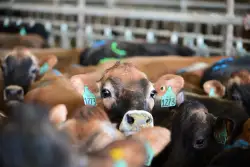
The U.S. dairy industry, driven by substantial investments and shifting consumer preferences, is poised for significant growth in the coming years.

The March Ag Economists’ Monthly Monitor found 62% of ag economists think the row crop side of agriculture is currently in a recession, and 85% think the situation will accelerate consolidation on farms and among agribusinesses.

Not only is USDA releasing its first survey-based acreage report of the year, but it’s the week President Trump is set to unleash reciprocal tariffs. Market analysts warn it could be an explosive week in the markets, and farmers should prepare.

With tariffs and trade in focus again, a recent AgWeb poll asked farmers if they support President Donald Trump’s use of tariffs as a negotiating strategy.

The majority of respondents in the March Ag Economists’ Monthly Monitor agree the U.S. is currently in a trade war, but who wins? Ag economists say it’s not the U.S., Canada or Mexico but rather Brazil that could come out on top.

Agriculture has always been at the heart of Oregon’s economy, environment, and local communities. This integral role was once again underscored at the 2025 Oregon Dairy Farmers Convention held earlier this week in Salem.