
Livestock Equipment Technology

Move over, artificial insemination. Artificial intelligence has found its way onto dairy farms, and is revolutionizing the way calves are raised

Robotic milking can be a game-changer for labor efficiency, but it doesn’t totally eliminate hands-on work—especially when it comes to fetching cows.

Activity monitoring technology is giving producers a more precise and efficient way to detect heats.

As the dairy sector continues to embrace technological innovation, producers have an unparalleled opportunity to enhance their operations significantly. By working smarter and strategically incorporating technology, they can ensure better productivity and welfare and secure a promising future for their farms.

Monarch says its Autodrive technology is the first commercially available, fully autonomous feature in a driver-optional tractor.

Tracking rumination during the dry and transition periods helps producers identify at-risk cows early and implement preventive measures for better health and productivity.
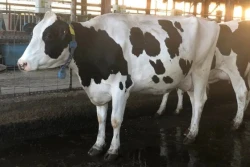
Activity and rumination monitoring systems -- precision cow monitoring -- can revolutionize the way a dairy manages its cows. Or they can pile up frustrations and create greater expense without adding value.

Elon Musk wants his futuristic Optimus robots to clean dishes and scrub carpets. But what if you wanted one of those creepy looking things working in your fields?

There’s no good way to quantify just how much has changed for dairies since a robot milked its first cow over 25 years ago. And part of the reason for that is the great strides the technology has made in the last two decades.

Do you ever wish you had a 24-hour herds person who never showed up late, never complained, and picked up on a problem with a cow better than you could? Well, that’s what automation has done for Jessica Pralle Trimner.

Mastering the intricacies of data management has become a vital role on today’s operations.

As the dairy industry continues to change at lightning speed, Farm Journal recently surveyed producers – asking them about challenges and opportunities that face them, which six leading-edge insights surfaced.

What are some of the hot new forms of technology dairy will likely see in the future?

The SENSEHUB monitoring ear tag incorporates a blinking LED light so workers can quickly and easily locate those animals and apply appropriate interventions.
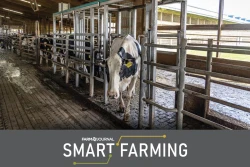
Once a technology becomes a boring experience it means it has become proven, well-adopted, and easy to utilize. There are three “boring” technologies silently shaping the industry.
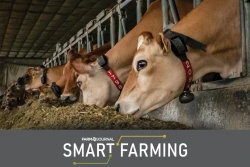
Technologies for the farm are not one size fits all. A few of the considerations that should be made before choosing the right technology is how the technology fits, works, and costs.
Smart farming robotic technology is all in the name of cow comfort, efficiency and productivity.

As dairy tech continues to mature, new solutions must be designed with a keen focus on user experience, taking cues from Apple’s strategy.
If you’ve flown internationally recently, you may have had a first-hand experience with facial recognition software.Now that technology has found its way to the dairy parlor.

VES-Artex has recently unveiled a new soaking system, Intelligent Soaker 2.0, which is designed to help alleviate heat stress while significantly reducing water usage on dairy farms.
Technology can give labor productivity a welcomed boost.

Integrating new software into your team can feel like a blind date. Worse yet, a speed date followed by an arranged marriage. This shotgun arrangement may not end well.

The “old” AI (artificial insemination) is intended to land cows in the maternity pen. Now, the “new” AI (Artificial Intelligence) is being engaged to monitor them.

Chris Szydel began working as a milker at Pagels Ponderosa nearly 30 years ago. Today, he’s the herd manager of both the Pagel Ponderosa and Hilltop Farm dairies and oversees three different parlors and 65 employees.

As a new approach to robotic milking for larger dairy operations, DeLaval has announced the launch of their new VMS™ Batch Milking system, a method advancement in robotic milking technology.

A big question on the minds of many decision makers on the dairy is: Should one invest more heavily in hiring highly skilled cow people or in adopting technology that can perform tasks that good cow people could do?

DeLaval has announced the launch of their new, re-designed automated teat sprayer, the DeLaval teat spray robot TSR2.

A team of Irish researchers has developed a breakthrough innovation to monitor activity and health characteristics of dairy cows – and it doesn’t involve and wires, chips, batteries, or electronics of any kind.

By using precision technologies such as automated milk feeders and pedometers combined with machine learning, dairy producers can detect illness earlier and make informed decisions about treatment.

It’s a bovine-centric version of “The Matrix” that may seem far from reality. But some cows in Israel and elsewhere are living in virtual reality.