
Animal health

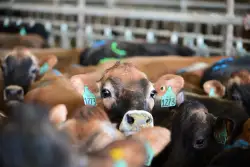
Human nutrition increasingly embraces fermentation as a natural and non-medicated means of promoting digestive health and supporting the gut microbiome. Now, some dairies are doing the same, by feeding kefir to their calves.

A sneak peak of Farm Journal’s leading-edge survey insights illustrates strategic solutions that generate renewed confidence, ensuring a promising path forward for the industry.

NCBA applauds Secretary of Agriculture Brooke Rollins’ aggressive efforts to suspend Mexican cattle, horse and bison imports, saying Mexico’s corruption and mismanagement has caused the pest to spread closer to the U.S.

Livestock producers say thanks to veterinarians for being valued members of their team.

It is important that dairy industry stakeholders work together to further understand the complexity and underlying mechanisms of heat stress impacts and develop alternative strategies to mitigate the risks.

Researchers continue to seek methods of monitoring animal health and welfare to anticipate health setbacks and improve the animals’ lives. The latest tool to do so: saliva.

Could a cow’s birth season impact its longevity and productivity? University of Florida researchers say yes—discover how heat stress at birth could shape a cow’s future.

With heifer prices at record highs, raising replacements on-farm can be a money saver since 2024 costs are much lower than buying on the market.
The U.S. dairy industry, driven by substantial investments and shifting consumer preferences, is poised for significant growth in the coming years.

The March Ag Economists’ Monthly Monitor asked economists if they think the U.S. general economy will see a recession in 2025. 62% said yes.

USDA Secretary Brooke Rollins says the agency is hyper-focused on poultry, but no vaccine is yet available. The agency has ‘separate work streams’ to address the virus in the ‘cattle and dairy’ industries, but dairy is not part of USDA’s primary focus for now.

Any hiccup in fresh-cow health is likely to put reproduction in jeopardy.

Even mild cases can impact milk production, health and well-being. Researchers, citing expenses and losses farmers incur from the problem, say costs per case commonly range from $76, on the low end, to more than $336, on average.

Soon after the discovery of highly pathogenic avian influenza (HPAI) strain H5N1 in dairy cattle, scientists learned that milk was a primary vector in spreading the disease from cow to cow.

The U.S. bovine semen industry’s resurgence in 2024 signifies more than just a recovery. It represents a transformative wave of growth that is poised to impact livestock reproduction on a global scale.

ENSO-neutral means conditions could be close to average, but Eric Snodgrass, Nutrien’s principal atmospheric scientist, says that doesn’t mean the weather will be normal this spring and summer with growing concerns about drought.

When cows accumulate too much copper, it piles up in the liver. The result can be liver damage at the cellular level, liver necrosis, and impaired liver function.

With lameness ranking among the most costly health issues in today’s dairy operations, a “set it and forget it” approach for footbaths is not an effective way to prevent the spread of digital dermatitis.

What is normal for calf body temperature, and when should they be treated for fevers? Industry experts weigh in on making temperature monitoring a routine part of daily calf care.


Learning why and how some calves navigate life challenges better than others can provide clues into how to support individual animals to achieve better welfare and performance, particularly with the aid of precision livestock technologies.

In the world of dairy farming, maximizing milk quality and cow comfort is paramount. Dr. Andy Johnson, famously known as ‘The Udder Doctor,’ has been at the forefront of this mission. With experience ranging from small farms with 20 cows to large-scale operations with 22,000 cows, Dr. Johnson’s insights have reached dairies across 30 countries and 47 states.

The largest supermarket chain in the United Kingdom has made social housing of preweaned dairy calves a requirement for its contracted supplier dairy herds.

Sec. Mike Naig says the U.S. government is using what he describes as a three-legged stool approach to address the virus in the dairy and poultry industries.

Cold, snow, wind, and more – winter in the northern climates brings extra challenges for dairies and their animals.

Chapped lips and hands aren’t the only things we need to worry about now that we are in the middle of the winter season. Winter weather has a significant impact on teat skin.

Any existing herd health problems are amplified by HPAI H5N1, practitioners report. Some are asking regulatory agencies for more consistent testing and reporting protocols. They are also encouraging producers to invest dollars in better nutrition and cow comfort resources.

As 2024 comes to an end, roughly 70% of the U.S. is experiencing some level of drought and dryness. What does that mean for 2025? According to one meteorologist, in six of the past 10 years with a really dry fall, the spring to follow was also dry.

The CR includes nearly $110 billion in disaster and farmer aid, which includes $10 billion in farmer aid and $21 billion ag disaster aid. $2 billion of that disaster aid is specifically for livestock producers. The measure also includes a one-year extension of the 2018 Farm Bill.

The eroding health of the overall farm economy was the emphasis of the latest Ag Economists’ Monthly Monitor, which is a survey of nearly 70 leading agricultural economists from across the country.