
Animal health

Strategically planning a dairy cow’s transition out of the herd can maximize meat quality, carcass yield, and overall profitability.

New Federal Order will require national milk testing and support state officials and dairy regulators; builds on actions to protect farms, farmworkers and communities from H5N1 avian influenza.

Sleep is becoming the next frontier in dairy research, opening discussions and posing more questions regarding its impact on animal productivity, welfare, and ethology.
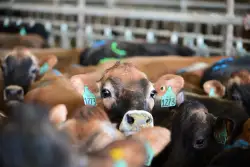
In the face of fluctuating market dynamics and economic pressures, innovative profitability strategies have become crucial, particularly in the dairy industry.

How this Iowa dairy boosts their bottom line with genomics and crossbreeding.
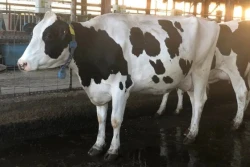
Activity and rumination monitoring systems -- precision cow monitoring -- can revolutionize the way a dairy manages its cows. Or they can pile up frustrations and create greater expense without adding value.

USDA announced on Oct. 30 the first reported case of H5N1 in a pig in an Oregon backyard farm.

According to a CSU study presented at the 2024 BIF Symposium, heart failure can occur at any type of operation, at any age, and any level of altitude.

National disease prevention relies on systematic monitoring and biosecurity to protect animal health, trade, and economic resilience against outbreaks like Highly Pathogenic Avian Influenza.

Pain is a natural condition for all animals and humans. But when it comes to dairy cattle specifically, the intensity and duration of their pain can have significant influence on both their welfare and productivity.
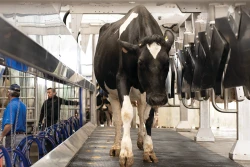
Three producers open up and share about their journey of innovation and technology as a way to spell longevity to their dairy operations.

Facilities, genetics, nutrition, stockmanship and marketing are some of the impotant factors to consider in the transition process.

It not just your diet that stands to benefit from less processing and higher fiber. According to Dr. Michael Ballou, researcher at Texas Tech University, calves also do better on a diet containing whole grains.

Maximizing pleasure and satisfaction in dairy calves isn’t required. But it does make them happier, and helps the dairy industry share a positive picture with the consuming public, according to University of Wisconsin animal behavior researcher Dr. Jennifer Van Os.

What is the world’s most expensive dairy disease? And what countries are hit hardest by these costs?
While even average crossbred animals are bringing a decent profit, healthy, well-grown calves are worth top dollar.

USDA calls these exotic arachnids “invasive pests that pose a serious threat to livestock.” Large numbers can infest a single animal, impacting growth and performance and, in extreme cases, causing death.

USDA-FSIS said it collected 30 samples from “states with dairy cattle herds that had tested positive for the H5N1 influenza virus at the time of sample collection.” No virus particles were found to be present.

According to FDA, the additional testing confirms the safety of the commercial milk supply with what it calls substantial data. The tests were done on 297 samples of milk from 38 states.

Federal officials are seeking to verify the safety of milk and meat after confirming the H5N1 virus in nine states since late March. The public health risk is low, but is higher for those exposed to infected animals.

Bust out the sunscreen and cattle misters. It’s gonna be a hot one this summer if USDA meteorological predictions are correct.

The agency will provide reimbursement for testing at an approved National Animal Health Laboratory Network laboratory.

The livestock industry needs a comprehensive, cohesive plan to address the virus. Producers, their employees and veterinarians need clear answers and support from U.S. agricultural leadership, moving forward.

South Dakota Dairy Producers encourages all dairy producers to closely monitor their herd and contact their herd veterinarian immediately if cattle appear symptomatic.

The American Association of Bovine Practitioners is making the name change, as it more accurately reflects the issue.

Bacteria, viruses, and protozoa all have crafty methods of making preweaned calves sick. Veterinarian Don Sockett shares his advice on fighting these organisms through effective cleaning and sanitation routines.

Kay Russo, DVM, Novonesis technical services manager for dairy and poultry, emphasized the situation is rapidly evolving and more clarity will come with time as researchers learn more.

Sid Miller, commissioner of the Texas Department of Agriculture, says the risk of highly pathogenic avian influenza impacting beef cattle in the state’s panhandle – where dairy cows have been infected – is minimal.

Livestock producers and veterinarians are urged to practice good biosecurity practices to prevent transmission of the disease. Five states have also issued restrictions on dairy cattle movement.

The Idaho State Department of Agriculture announced that HPAI, known as highly pathogenic avian influenza, or bird flu, has been found in dairy cattle in Idaho.