
Animal Welfare
Using a pain reliever like Meloxicam should be a consideration for dairy producers.
Dairy producers quite literally make their living milking cows. In most cases, their financial well-being relies on robust milk production obtained while dealing with ever-changing input costs. By taking part in animal

USDA Secretary Brooke Rollins says the agency is hyper-focused on poultry, but no vaccine is yet available. The agency has ‘separate work streams’ to address the virus in the ‘cattle and dairy’ industries, but dairy is not part of USDA’s primary focus for now.

Soon after the discovery of highly pathogenic avian influenza (HPAI) strain H5N1 in dairy cattle, scientists learned that milk was a primary vector in spreading the disease from cow to cow.

ENSO-neutral means conditions could be close to average, but Eric Snodgrass, Nutrien’s principal atmospheric scientist, says that doesn’t mean the weather will be normal this spring and summer with growing concerns about drought.

With lameness ranking among the most costly health issues in today’s dairy operations, a “set it and forget it” approach for footbaths is not an effective way to prevent the spread of digital dermatitis.

What is normal for calf body temperature, and when should they be treated for fevers? Industry experts weigh in on making temperature monitoring a routine part of daily calf care.

Learning why and how some calves navigate life challenges better than others can provide clues into how to support individual animals to achieve better welfare and performance, particularly with the aid of precision livestock technologies.

In the world of dairy farming, maximizing milk quality and cow comfort is paramount. Dr. Andy Johnson, famously known as ‘The Udder Doctor,’ has been at the forefront of this mission. With experience ranging from small farms with 20 cows to large-scale operations with 22,000 cows, Dr. Johnson’s insights have reached dairies across 30 countries and 47 states.

The largest supermarket chain in the United Kingdom has made social housing of preweaned dairy calves a requirement for its contracted supplier dairy herds.

Any existing herd health problems are amplified by HPAI H5N1, practitioners report. Some are asking regulatory agencies for more consistent testing and reporting protocols. They are also encouraging producers to invest dollars in better nutrition and cow comfort resources.

Strategically planning a dairy cow’s transition out of the herd can maximize meat quality, carcass yield, and overall profitability.

New Federal Order will require national milk testing and support state officials and dairy regulators; builds on actions to protect farms, farmworkers and communities from H5N1 avian influenza.
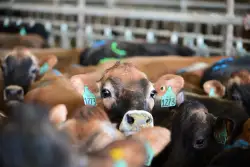
In the face of fluctuating market dynamics and economic pressures, innovative profitability strategies have become crucial, particularly in the dairy industry.

USDA announced on Oct. 30 the first reported case of H5N1 in a pig in an Oregon backyard farm.

National disease prevention relies on systematic monitoring and biosecurity to protect animal health, trade, and economic resilience against outbreaks like Highly Pathogenic Avian Influenza.
The National Dairy FARM Program is a testament to the industry’s dedication to progress, sustainability, and responsibility. Through its dynamic and customizable approach, it equips dairy farmers with the tools necessary for a sustainable future while boosting consumer confidence in dairy products.

Two ag industry powerhouses have announced the launch of the “Milk Sustainability Center,” a collaboration between John Deere and DeLaval.

Understanding the economics of management practice adoption can make it easier to make adoption decisions.

Maximizing pleasure and satisfaction in dairy calves isn’t required. But it does make them happier, and helps the dairy industry share a positive picture with the consuming public, according to University of Wisconsin animal behavior researcher Dr. Jennifer Van Os.

Floodwaters breached levees in parts of Iowa on Tuesday, with more flooding anticipated for Wednesday. The damage to row-crop and livestock operations is likely significant, according to state officials.

Cows still need to be handled during the hottest days of the year. Thus, taking the time to conduct a quick refresher on animal handling during hot weather is a necessary practice for you and your team.

Is it early June or the middle of August? Because despite what the calendar might say, Mother Nature seems to be cranking up the thermostat earlier than normal this year.
If new predictions hold true it could be a hotter than normal summer across much of the U.S

Euthanasia is a necessary – and hopefully infrequent – decision in livestock production. Experts offer guidance on determining when it is necessary, and the best ways to do it.

USDA calls these exotic arachnids “invasive pests that pose a serious threat to livestock.” Large numbers can infest a single animal, impacting growth and performance and, in extreme cases, causing death.

The livestock industry needs a comprehensive, cohesive plan to address the virus. Producers, their employees and veterinarians need clear answers and support from U.S. agricultural leadership, moving forward.

A recent survey shows that the likelihood of using pain mitigation for common procedures like dehorning, disbudding and castration was directly linked to the human managers’ perception of pain for the animal.

Solvet Lidoband is approved for use in calves under 250 pounds and in lambs under 50 pounds. The local, soothing anesthesia works for up to 42 days, helping veterinarians and producers improve animal well-being.

Everyone knows communication is key to animal agriculture’s future success. That’s why the Animal Agriculture Alliance and National Institute for Animal Agriculture (NIAA) are teaming up.

Scoring teat ends tells a story of how happy a cow is with how she is milked and treated. It also provides insights into whether the milking process is harmful to the animal and needs to be changed.

Without intervention, 40% of calves that need more than minor assistance at birth will die.