
Vaccination

Even the best vaccine can fail if mismanaged. Dr. Jon Townsend outlines good handling practices to protect your investment and your cattle.

Dr. Taylor Engle of Four Star Veterinary Services shares how producers can improve calf health outcomes by rethinking everything from pre-birth to bunk.


Sec. Mike Naig says the U.S. government is using what he describes as a three-legged stool approach to address the virus in the dairy and poultry industries.

Even the best vaccine won’t protect your cows if it’s not stored right.
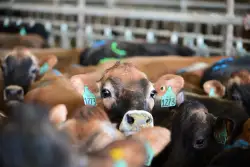
In the face of fluctuating market dynamics and economic pressures, innovative profitability strategies have become crucial, particularly in the dairy industry.
As misinformation regarding the use of mRNA vaccines in livestock filter through social media, there are facts begging to be set straight.

As we near 200-herds being impacted by highly pathogenic avian influenza (HPAI), the USDA says work is moving forward on a vaccine.

No matter when beef cross calves are being sold, steps can be taken to make them more marketable.

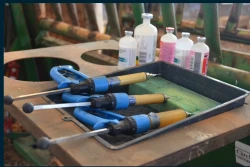
Depending on the size of the animal, viscosity of the product and administration protocols, a variety of needles might be needed. Here’s some guidelines to help decide.

According to Iowa State University’s David Verhoeven, vaccines using mRNA technology have been shown to reduce disease on farms, and it’s all but impossible for them to end up in your food.

Misinformation and conspiracy theories regarding the use of mRNA vaccines in livestock continue, despite efforts of the scientific community, who emphasize, “mRNA from a vaccine will NOT be passed along in meat.”

Household units and mini fridges are often unsuitable for maintaining veterinary products, according to a recent study by Emmanuel Rollin, DVM, College of Veterinary Medicine at the University of Georgia.

Just because we have easy access to the thousands of beef-on-dairy cross calves eventually headed for feedyards doesn’t mean we should be vaccinating them every week, according to Dan Thomson.

It’s an old and frustrating disease that is not easily controlled. But Johne’s disease may soon be tamed by a new vaccine under development.
There are several variables in the vaccination equation: the people, the animals, and the vaccine.