
Dairy Production

Bloody scours in calves is never a welcome sight, but diagnosing the source can help with treatment and prevent future cases.

While dairy cattle can’t verbally tell us when they’re not feeling their best, they can give us physical cues.


No one wants to have a down cow, but unfortunately it does occasionally happen.

Whether or not to feed hay to preweaned dairy calves is a longstanding debate, without an absolute answer.

FDA says preliminary results of additional testing of more dairy products has shown pasteurization inactivates the H5N1 virus.

With feed prices dropping, no indemnity payment will be issued for March milk production, as the USDA Agricultural Prices report calculated Dairy Margin Coverage (DMC) income over feed costs to be $9.65.

USDA is now ordering all dairy cattle must be tested prior to interstate travel as a way to help stop the spread of HPAI H5N1. This comes a day after FDA confirmed virus genetic material was found in retail milk samples.
The deadline to enroll for the USDA’s Dairy Margin Coverage (DMC) and Supplemental Dairy Margin Coverage (SDMC) programs is approaching fast. The last day for producers to sign up is Monday, April 29, 2024.
USDA said this week cow-to-cow transmission is a factor in the spread of avian flu in dairy herds, but it still does not know exactly how the virus is being moved around.

Daisy Brand, a well-known sour cream and cottage cheese manufacture based out of Dallas, Texas, has announced its plans to build a new processing facility in Boone, Iowa.

Consistent biosecurity measures have always been needed on dairy farms. And, on the heels of several confirmed cases of the HPAI in dairy cattle this spring, the need for stepped-up biosecurity measures is essential.

Lucas Fuess with RaboResearch says we are now in a far different state as producers have kept fewer replacement heifers and the milking herd numbers are the lowest they’ve been in four-plus years.

Comparing a leap year versus a non-leap year in 2023, February milk production was up 2.4%. However, on a per-day basis, production was down 1.1%. Milk cows totaled 9.3 million head, down 89,000 compared to a year ago.
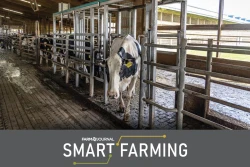
Once a technology becomes a boring experience it means it has become proven, well-adopted, and easy to utilize. There are three “boring” technologies silently shaping the industry.
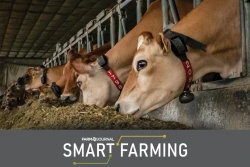
Technologies for the farm are not one size fits all. A few of the considerations that should be made before choosing the right technology is how the technology fits, works, and costs.

In affected cowherds, the illness impacts nearly 10% of the animals, causing reduced feed consumption and a 10% to 20% decline in milk production.

Cow numbers declined last year and will likely decline further if milk prices remain low. Tightening heifer numbers and higher milk replacement cow prices may reduce the ability of farms to keep stalls full.
Technology can give labor productivity a welcomed boost.

The “old” AI (artificial insemination) is intended to land cows in the maternity pen. Now, the “new” AI (Artificial Intelligence) is being engaged to monitor them.

Keeping cows, calves and employees comfortable during the winter months is a balancing act. However finding the right combination between keeping animals warm while also providing adequate air exchange is essential.

Since 2011, dairy cows evaluated using genetic testing has doubled every five years to exceed 1 million annually. That reduced sire generation interval to the point where genetic improvement is at the biological limit.

Chris Szydel began working as a milker at Pagels Ponderosa nearly 30 years ago. Today, he’s the herd manager of both the Pagel Ponderosa and Hilltop Farm dairies and oversees three different parlors and 65 employees.
Travel the I-29 corridor and you’ll see an explosion of dairy cattle. As of January 2024, USDA announced that the total number of dairy cows in South Dakota totals 208,000, up 70.5% since 2019.

For the seventh consecutive month, U.S. milk production dropped. Also following suit was a decline in cow numbers, the lowest total since November 2019.

Higher prices for beef calves are incentivizing dairy producers to breed crossbred bull calves

Are you pulling your hair out because your milking parlor is constantly running behind schedule? This is one of the biggest frustrations and time and money drains for a lot of dairies.

Environmental restrictions and low milk prices continue to challenge European milk producers.

According to Idaho Dairymen’s Association for the first time in a long time, production growth will likely come to a halt due to the financial stress and the negative margins producers out west are experiencing.

The USDA Milk Production Report highlighted a drop in milk production to 18.8 billion lbs. of milk. This reflects the sixth consecutive month of lower production and a decline of 0.3% from a year prior.

With the start of the new year comes the setting of resolutions for personal habits, behaviors and practices. Dairies can and should do the same for their operations. Here are six places to start.

From the intense heat in the South to drought blanketing much of the U.S., weather stole headlines again in 2023. What caused such extreme conditions? One meteorologist explains the culprits of the heat and drought.

Minnesota ended 2023 with 146 fewer dairy farm permits than the state did at the beginning of the year. The big-ticket question is with dairy’s razor-thin financial margins, how many more dairies will exit in 2024?

A big question on the minds of many decision makers on the dairy is: Should one invest more heavily in hiring highly skilled cow people or in adopting technology that can perform tasks that good cow people could do?

Animal Agriculture Alliance releases reports from 2023 animal rights conferences. Food chain urged to prepare for activism in 2024 including “open rescue,” legislative campaigns and pressure to drop meat from menus.