
Cheese

The grain market took a tumble with September corn falling back below $4.

USDA’s June Cold Storage report was neutral for butter but bullish for cheese.

USDA pegged U.S. milk production at 18.8 billion pounds in June. That was down 1.0% versus 2023, a bigger drop than anticipated.

Spot cheese prices started the week off with an increase. Crop conditions are holding relatively steady through the dog days of summer.

Kathleen Wolfley with Ever.Ag spoke on a recent ‘Protect Your Profits’ webinar where she outlined many valuable insights, including five things dairy producers need to not only know, but also continue to keep a watchful eye on.

Milk prices have been better than expected and could remain that way for a while. Lower American cheese production and strong exports should provide further support.

The dairy market remains in a complex landscape of shifting prices and fluctuating demand. Kathleen Wolfley with Ever.Ag says more positivity is coming into the marketplace as we look at late 2024 on into 2025.

Both international demand for cheese and butter improved in April, moving exports significantly above a year ago. However, there may be no further DMC payments for the rest of the year. Here’s why.

It was another day of green in the cheese market. CME spot prices pushed higher, with block values reaching the highest level since August 2023.

Today’s stout April cheese export data offered a good reminder that competitive U.S. prices can help move the needle on exports.

Today’s GDT event was supportive, with increases in powders and cheese fueling further gains in Class III and IV futures.

Limited U.S. milk production likely will offset weakening exports.

In the ever-evolving marketplace, innovation remains at the forefront of progress. Betty Berning of HighGround Dairy recently joined AgriTalk to talk about dairy markets and shed light on some developments and trends.
Returning from the extended holiday weekend, dairy markets opened the week on a bearish note.

Michael Dykes shared that IDFA is pleased to see the House Agriculture Committee’s 2024 Farm Bill expand the SNAP Healthy Fluid Milk Incentive (HFMI) to include the full suite of nutritious milk options.

The USDA raised its milk production forecast for 2024 based on an increase in dairy cows and more rapid growth in output per cow.

Class III futures have made an impressive increase over the past month with the June contract increasing by over $4.00 per cwt. The last time we saw this movement in an actively traded contract was in the spring of 2020.

Rabobank believes slow but steady dairy commodity price gains will materialize in the second half of this year.
International demand needs to pick up before U.S. milk prices can increase significantly.

Daisy Brand, a well-known sour cream and cottage cheese manufacture based out of Dallas, Texas, has announced its plans to build a new processing facility in Boone, Iowa.

Green returned to milk markets Friday as we finish the week on a strong note in a highly volatile market.

Third quarter Class III futures dropped to $18.02 per hundredweight, a 14-cent loss.

Tillamook County Creamery Association President & CEO Patrick Criteser announced he will step down later this year. David Booth, TCCA’s current EVP of Brand Growth & Commercialization has been appointed his replacement.
Cheese continued its descent on Monday as cheddar blocks fell 2.50 cents and barrels were down 2.75 cents. Class III values also reacted in a weaker tone.
Depooling, new cheese production capacity, lower component prices all take toll on income.

Krysta Harden with USDEC told those attending High Plains Dairy Conference in Amarillo, Texas the financial well-being of the U.S. dairy farmer will be critical to U.S. export success in 2024.

Milk markets closed a very rough week in similar fashion on Friday.
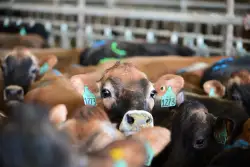
Travel the I-29 corridor and you’ll see an explosion of dairy cattle. As of January 2024, USDA announced that the total number of dairy cows in South Dakota totals 208,000, up 70.5% since 2019.
For the seventh consecutive month, U.S. milk production dropped. Also following suit was a decline in cow numbers, the lowest total since November 2019.
There is great optimism that butter prices will be higher than cheese prices this year.