
Dairy Biosecurity
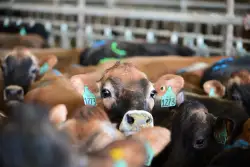
The latest USDA Milk Production Report reveals the true impact HPAI has had on dairies.

Nuisance birds are more than just an annoyance now with the risk of spreading Highly Pathogenic Avian Influenza. Explore tips for ridding dairy sites of unwanted avian visitors.

Kansas, Nebraska, New Mexico and Texas are participating in the voluntary pilot program. Additional testing for the virus is also underway in aged raw-milk cheese, cream cheese, butter and ice cream.

June 6 (Reuters) - The ongoing U.S. outbreak of avian flu in dairy cattle reached Minnesota on Thursday as the state announced its first infected herd.

APHIS issued its final rule on animal ID that has been in place since 2013, switching from solely visual tags to tags that are both electronically and visually readable for certain classes of cattle moving interstate.

Federal officials are seeking to verify the safety of milk and meat after confirming the H5N1 virus in nine states since late March. The public health risk is low, but is higher for those exposed to infected animals.

The agency will provide reimbursement for testing at an approved National Animal Health Laboratory Network laboratory.

The livestock industry needs a comprehensive, cohesive plan to address the virus. Producers, their employees and veterinarians need clear answers and support from U.S. agricultural leadership, moving forward.

USDA is now ordering all dairy cattle must be tested prior to interstate travel as a way to help stop the spread of HPAI H5N1. This comes a day after FDA confirmed virus genetic material was found in retail milk samples.

USDA said this week cow-to-cow transmission is a factor in the spread of avian flu in dairy herds, but it still does not know exactly how the virus is being moved around.

Consistent biosecurity measures have always been needed on dairy farms. And, on the heels of several confirmed cases of the HPAI in dairy cattle this spring, the need for stepped-up biosecurity measures is essential.

South Dakota Dairy Producers encourages all dairy producers to closely monitor their herd and contact their herd veterinarian immediately if cattle appear symptomatic.
The American Association of Bovine Practitioners is making the name change, as it more accurately reflects the issue.

Bacteria, viruses, and protozoa all have crafty methods of making preweaned calves sick. Veterinarian Don Sockett shares his advice on fighting these organisms through effective cleaning and sanitation routines.

Kay Russo, DVM, Novonesis technical services manager for dairy and poultry, emphasized the situation is rapidly evolving and more clarity will come with time as researchers learn more.

Ohio has become the sixth state where dairy cattle have tested positive for highly pathogenic avian influenza (HPAI), also known as bird flu.

Livestock producers and veterinarians are urged to practice good biosecurity practices to prevent transmission of the disease. Five states have also issued restrictions on dairy cattle movement.

So far, HPAI has not had an impact on milk futures or the underlying cash prices. However, HPAI has not had an impact on milk futures or the underlying cash prices.

The livestock industry continues to grapple with the first confirmed cases of HPAI in cattle, while federal and state agencies continue to assure consumers there’s no concern about the safety of the U.S. milk supply.
USDA says genetic sequencing revealed the mystery illness impacting Texas dairies is the same strain of Highly Pathogenic Avian Influenza (HPAI) that’s been in the U.S. The virus is carried by wild waterfowl.

Stronger, or enhanced, levels of biosecurity will be needed to protect dairy cattle.

The Milk Business Conference in Las Vegas Nov. 28-30, highlights every corner of the dairy industry and has a great line-up of speakers to help producers capitalize on and further develop their strengths. Sign up today.
!["There's no cure for any of it [HPAI, FMD and ASF]," Bacus says. "The best thing we could hope to do is track and vaccinate our way out of it."](https://assets.farmjournal.com/dims4/default/048af1e/2147483647/strip/true/crop/640x428+0+26/resize/250x167!/format/webp/quality/90/?url=https%3A%2F%2Ffj-corp-pub.s3.us-east-2.amazonaws.com%2Fs3fs-public%2Flivestock_trucks-trailer_%283%29.JPG)
Under the rule, APHIS would require tags that are both visually and electronically readable for interstate movement of cattle and bison six months after a final rule is published in the Federal Register.

Achieving big milk production requires doing a lot of small things correctly and consistently in the feeding center.

Art Schaap, owner of Highland Dairy in Clovis, New Mexico, has been living a nightmare for the past four years. His nightmare is finally coming to an end, but not without the heartache of euthanizing 3,665 cows.

Whether we are using cameras and security systems or phones and computers, data is everywhere. During a recent PDPW Dairy Signal broadcast, Toby Cherny outlines the importance of keeping your farm data safe.

Though there are many different disinfectants available on the market, one is emerging as the clear cleaner of choice.

Contraband meat entering the United States illegally is on a dramatic upswing, creating risk to the safety of U.S. livestock herds and poultry flocks.
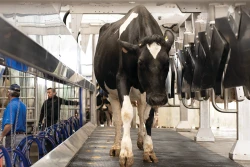
While it is impossible for 100 percent healthy animals, we can minimize the number of sick animals with the help of technology.

With the global pandemic having a paralyzing effect on households, communities and the world economy, it is no wonder that the threat of disease to the livelihoods of dairy producers is also a very real concern.