
Industry News

Scott will bring Midwest Dairy experience to the national checkoff as she succeeds O’Brien.

After 10 years of growth and policy momentum, IDFA will begin a search for new leadership as Michael Dykes plans to retire in 2026.

After transforming the dairy checkoff into a unified powerhouse, DMI CEO Barbara O’Brien announces her retirement, ensuring a seamless transition from a position of organizational strength.

Over the past decade, the number of mixed animal and food animal veterinarians has decreased by 15%. USDA’s plan encompasses five actions to support veterinarians and protect livestock across rural communities.

Economics suggest producers will keep cull rates low.

With fewer young professionals entering large animal medicine, the University of Vermont’s CREAM Program offers a unique, hands-on approach to preparing the next generation of dairy veterinarians through real-world experience.

EPA Administrator Lee Zeldin proposes rescinding the 2009 Greenhouse Gas Endangerment Finding. If the proposal goes into effect, it could potentially lead to DEF systems no longer being required in tractors, trucks and other equipment using diesel-powered engines — a decision many farmers and others in the ag community would applaud.

A new SensaPay study reveals the top spending categories that consumers refuse to cut, prioritizing fresh produce, meat and dairy as leading essentials in 2025.

Four social media influencers who live and work on farms share how the viral #FarmGirlSummer trend is offering an authentic look at rural life — while building connections, educating viewers and challenging stereotypes along the way.

A shrinking labor pool is already having an impact, and ag experts say it’s only going to get tougher.

Secretary Rollins takes decisive action and shuts down cattle, bison and equine trade due to further northward spread of the devastating pest in Mexico.

Beef-on-dairy crossbreds show clear advantages in feed efficiency and carcass performance, but Michigan State University research reveals current market premiums often exceed their true economic value.

What’s the long-term difference between starting a retirement plan at age 20 versus 40? Farm CPA Paul Neiffer crunches the numbers.

Dairy replacement heifers and beef-cross calves are fetching record-breaking prices this spring, with Holstein springers hitting $4,200 and beef-cross calves surpassing $1,600.

The Senate Agriculture Committee has advanced the bipartisan Whole Milk for Healthy Kids Act, a major step toward restoring whole and 2% milk options in schools.

This is the 2025 dairy industry. Short on certainty. Long on volatility. Sharp management is more crucial than ever.

Navigating the world of health insurance can be daunting, especially for farmers and small business owners. Here’s an explanation of several options that might work for you.

Results from Farm Journal’s State of the Dairy Industry 2025 report shine hope.

A sneak peak of Farm Journal’s leading-edge survey insights illustrates strategic solutions that generate renewed confidence, ensuring a promising path forward for the industry.

It’s history in the making in U.S. dairy animal trade right now, as springer values stay knocking on the door of $4,000 per head.

Staph. aureus is being Confirmed More Frequently as the Culprit Contributing to Subclinical Mastitis
One researcher says of the 7,800 bulk tank milk samples her company tests annually, 45% of them are positive for the bacterium.

With heifer prices at record highs, raising replacements on-farm can be a money saver since 2024 costs are much lower than buying on the market.
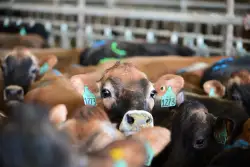
The U.S. dairy industry, driven by substantial investments and shifting consumer preferences, is poised for significant growth in the coming years.

The March Ag Economists’ Monthly Monitor asked economists if they think the U.S. general economy will see a recession in 2025. 62% said yes.

USDA Secretary Brooke Rollins says the agency is hyper-focused on poultry, but no vaccine is yet available. The agency has ‘separate work streams’ to address the virus in the ‘cattle and dairy’ industries, but dairy is not part of USDA’s primary focus for now.

Soon after the discovery of highly pathogenic avian influenza (HPAI) strain H5N1 in dairy cattle, scientists learned that milk was a primary vector in spreading the disease from cow to cow.

The U.S. bovine semen industry’s resurgence in 2024 signifies more than just a recovery. It represents a transformative wave of growth that is poised to impact livestock reproduction on a global scale.