
Livestock Benchmarking

More and more dairies are looking to technology to help dial in on efficiencies and help spell future success of their operations.

What are some of the hot new forms of technology dairy will likely see in the future?

The SENSEHUB monitoring ear tag incorporates a blinking LED light so workers can quickly and easily locate those animals and apply appropriate interventions.
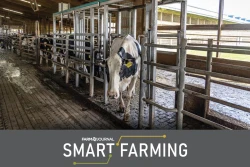
Once a technology becomes a boring experience it means it has become proven, well-adopted, and easy to utilize. There are three “boring” technologies silently shaping the industry.
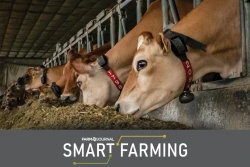
Technologies for the farm are not one size fits all. A few of the considerations that should be made before choosing the right technology is how the technology fits, works, and costs.
Smart farming robotic technology is all in the name of cow comfort, efficiency and productivity.

As dairy tech continues to mature, new solutions must be designed with a keen focus on user experience, taking cues from Apple’s strategy.

Integrating new software into your team can feel like a blind date. Worse yet, a speed date followed by an arranged marriage. This shotgun arrangement may not end well.
By integrating complex biosensors technology onto our farms, we are now capable of knowing more about our cows’ bodies than ever before.

The “old” AI (artificial insemination) is intended to land cows in the maternity pen. Now, the “new” AI (Artificial Intelligence) is being engaged to monitor them.

Tri-Cross Dairy has recently completed a new renewable natural gas (RNG) production facility with Clean Energy and is expected to supply 1 million gallons of negative carbon-intensity RNG annually.

Chris Szydel began working as a milker at Pagels Ponderosa nearly 30 years ago. Today, he’s the herd manager of both the Pagel Ponderosa and Hilltop Farm dairies and oversees three different parlors and 65 employees.

As a new approach to robotic milking for larger dairy operations, DeLaval has announced the launch of their new VMS™ Batch Milking system, a method advancement in robotic milking technology.

A big question on the minds of many decision makers on the dairy is: Should one invest more heavily in hiring highly skilled cow people or in adopting technology that can perform tasks that good cow people could do?

A team of Irish researchers has developed a breakthrough innovation to monitor activity and health characteristics of dairy cows – and it doesn’t involve and wires, chips, batteries, or electronics of any kind.

The best and most effective technologies in dairy production today are not necessarily the ones with the most bells and whistles. Rather, they’re the ones that simply “let cows be cows.”

Robots, sensors, connected devices, virtual reality and even artificial intelligence (AI) have become a daily presence in our hospitals. As agriculture is facing its own transformation what lessons can we learn?
Dairy cow mortality rates have come down marginally, but are higher when compared to beef production.

“We know the pivotal role technology has played in getting us to where we are today and there’s no denying that it’s going to play an impactful part in where we go with animal health.”

Switching from a herringbone to a robotic rotary parlor.
Ag technology startups get a boost from one another and Dairy Farmers of America.

As more farms adopt automatic feeders and group housing to raise their preweaned calves, more, too, is being understood about the factors that impact calf health in such rearing systems.

One of the steps that can often be overlooked is the feed scale and the error that can occur during mixing.

Keeping milk equipment clean is one of the most important factors to producing quality milk. However, taking the time to make sure the wash system is working correctly is a chore producers often skip.

What’s one piece of technology that has drastically improved your operation in the past five to 10 years?