
Milk - General

And then there was quiet. After a week of see-saw action in the spot cheese market, Friday’s CME cheddar prices finished unchanged

Chapped lips and hands aren’t the only things we need to worry about now that we are in the middle of the winter season. Winter weather has a significant impact on teat skin.

Many of us start thinking about ways to improve our fitness and health now that the New Year has begun. The usual advice from experts is to get moving. But when it comes to getting financially fit, sitting down might just be your best bet.

The volatile trading week for cheese continued today, with both blocks and barrels jumping higher. Class III prices responded positively by climbing through the first five months of the year.

The United States Department of Agriculture (USDA) Agricultural Marketing Service (AMS) has unveiled a pivotal final rule that amends the uniform pricing formulas for all eleven Federal milk marketing orders (FMMOs).

Byrne Dairy, a New York dairy company located in Syracuse, is moving forward with a $120 million expansion of its manufacturing facility in Cortlandville.
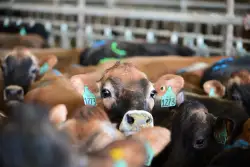
As we look ahead to the opportunities and challenges of 2025, the USDA’s Farm Service Agency (FSA) is once again opening the doors for enrollment in the Dairy Margin Coverage (DMC) program.

Class III markets took a breather after yesterday’s extreme lower move to check in with spot markets.

Dairy producers are starting the year off with margin pressure following the latest round of USDA reports.

The Chief Economist for the National Milk Producers Federation (NMPF), Peter Vitaliano reflects on the changes he has observed over his tenure and shared his vision for the future of the industry.

Class III futures rose on the heels of CME cheese, with February and March contracts settling at $20.60 and $20.27 per hundredweight, up 33 and 31 cents, respectively.

2025 IDFA Innovative Dairy Farmer of the Year award winner bridges tradition and innovation.

It was a rough day for dairy producer margins, as milk prices came under pressure while grain prices rallied.

Milk production forecasts for 2024 and 2025 have been reduced due to lower cow inventories and slower output growth per cow, according to the latest WASDE report.

Navigating the shifting tides into the New Year with milk prices, demand and the outlook on trade.

Despite the decline in CME blocks, nearby Class III contracts ticked higher. February and March futures rose to $20.92 and $20.59 per hundredweight, tacking on six and eight cents, respectively.

Global milk production among leading dairy exporters is headed for growth in 2025, but will it be sufficient to offset rising dairy demand?

Looking back on the past year, we see price improvements in all categories.

The legislation would reinstate whole and 2% milk in federal school meals programs.

The Class III market ended the week on a positive note, settling higher through most of the first half.

Writing and recounting the journeys of dairy farmers from across the nation has been a substantial blessing. These stories are more than just accounts of labor; they are testimonies of passion, ingenuity, and a commitment to a way of life that feeds the nation.

Class III futures started off the new year with a pop this morning.

Navigating the complexities of dairy farming requires meticulous attention to detail, especially when dealing with the transition period for dry cows.

On the heels of the CME cheese jump, the January Class III contract climbed to $20.43 per hundredweight, tacking on 31 cents.

The year 2024 has presented better financial outcomes for the dairy industry compared to the previous year, offering optimism and new opportunities for growth. Two notable dairy producers, Greg Moes of MoDak Dairy in South Dakota and Grant Grinstead with Vir-Clair Farm in Wisconsin, shared their insights on a recent episode of AgriTalk with Davis Michaelson.

Following a slow performance in the spot market yesterday, today’s trading saw a bit more activity ahead of the early market close.

Brian Forrest of Maple Ridge Dairy near Stratford, Wisconsin, embodies a spirit of selflessness and resilience, as he has been an organ donor, not just once, but twice.

Phil Plourd, president of Ever.Ag Insights, highlights the complexity in deciphering the USDA’s latest Milk Production report for the second month in succession. The narrative isn’t straightforward when external factors such as geographical variances and animal health issues come into play.

In less than two years, dry whey prices have rallied from their all-time low.

Whether it’s whole milk, 2%, eggnog or chocolate, Santa sure loves to drink the good stuff – real milk from real, hardworking dairy farm families!