
Dairy - General

While markets responded positively to yesterday’s news of delays, continued pressure on China leaves the future of dairy prices up in the air.

Rising tariffs between the U.S. and China are putting pressure on key dairy exports like whey and lactose, sparking concern over the potential of lost sales and falling prices.

Farming is hard work, but using technology to make farming “smart” can make it easier.

Class III futures saw a strong rebound with significant gains in May and June contracts, while cheese prices edged higher, despite ongoing U.S.-China tariff tensions impacting dairy markets.

In recent discussions surrounding trade policies and tariffs, the dairy industry has been notably affected. Rick Naerebout, CEO of the Idaho Dairymen’s Association, reflect on how the Trump 2.0 approach closely mirrors Trump’s earlier strategy, aimed at extracting concessions from trade partners.

Don’t let the calendar, coffee shop talk or what your neighbors are doing dictate when you head to the field. Farm Journal field agronomists offer these four tips to help you get your best start ever with #planting2025.

Cheese and Class III futures rallied on stronger spot prices, even as rising trade tensions with China and looming tariffs stirred market uncertainty.

AgSource Cooperative Services is transitioning into an independent cooperative entity.

Arla Foods and DMK Group plan to merge, creating Europe’s largest farmer-owned dairy cooperative with over 12,000 members and a projected $20.8 billion in annual revenue.

As dairy producers strive for efficiency and higher profitability, the famed “7 lb. target” has become a focal point in dairy production conversations.

Farm life can help ingrain timeless values into the next generation, as demonstrated by three teenagers who committed to daily duties at the dairy.

It’s history in the making in U.S. dairy animal trade right now, as springer values stay knocking on the door of $4,000 per head.

After weeks of heavy spot trade, Monday brought a calmer, mostly green day to dairy markets, with cheese leading the rebound despite ongoing tariff tensions and early futures pressure.

The shrinking pool of workers in rural areas is a real concern as populations decline and economic opportunities increase in countries that have historically been sources of agricultural labor for the U.S.

Class III milk futures slipped lower Wednesday as China’s 34% reciprocal tariffs sent shockwaves through whey, soybeans, cattle, energy, and stock markets.

Supporters of the Whole Milk for Healthy Kids Act say more milk choices in school lunches mean healthier kids, less waste and a stronger future for dairy.

The CEO of Legacy Ranches shares the benefits of making efficiency an essential part of its operations.

There was red almost across the board today as the market finally got a little clarity around tariffs following yesterday’s announcement.

President Trump has announced a series of reciprocal tariffs, scheduled to start over the next few days, on some of agriculture’s most significant trade partners. The outcomes could be a net positive for dairy producers, some industry members say.

With heifer prices at record highs, raising replacements on-farm can be a money saver since 2024 costs are much lower than buying on the market.

Could a cow’s birth season impact its longevity and productivity? University of Florida researchers say yes—discover how heat stress at birth could shape a cow’s future.

Global price disparities and anticipation surrounding President Trump’s tariff announcement kept the industry on edge.

For the third consecutive year, the prestigious Milk Business Awards honor exceptional dairy producers who have demonstrated excellence across various aspects of the business. The deadline to apply for the awards is Aug. 1.

Heifer supplies are tight, but cow numbers continue to increase and are substantially higher than a year ago. High heifer prices and a tight supply have resulted in farmers holding on to more cows.

Three innovative dairy producers illustrate that with dedicated teams, efficient operations and innovative technology, the dairy industry can achieve remarkable quality and productivity.

After yesterday’s muted session, CME cheese markets had a much busier day today.

Technical difficulties delayed the CME spot trade on Monday, preventing a smooth spot trade.
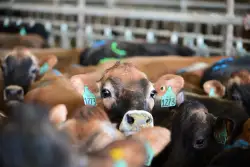
The U.S. dairy industry, driven by substantial investments and shifting consumer preferences, is poised for significant growth in the coming years.

Curious about your farm’s environmental footprint? A new program is helping dairy producers measure their impact, understand key sustainability metrics, and make informed decisions for the future.

Amanda Freund, a Connecticut dairy farmer is headed to “Shark Tank,” where she aims to propel her creation, CowPots, into the mainstream.